Wednesday, February 01, 2012

WNW: Use (and Abuse) of the Semicolon

FIRST OFF, some news . . .
Back by popular demand: Precision Editing Group is hosting their next Live Critique Workshop in a month! It'll be held at the American Fork Library on Saturday, March 3rd. Attendees are divided among tables, and they get to work with an instructor (staff are all both published writers and professional editors) assigned to each table. Bring along several pages of a work in progress to be workshopped. It's a great learning experience and a bargain to boot. But space IS limited. For full information and instructions for registering, visit the PEG Workshop blog.

Now to today's topic.

Of late, I've come across oodles of egregious semicolon abuse, and it's made me realize that

a) Not everyone in the world loves that little punctuation mark like I do and

b) Fewer know how to use it.

This post is my small attempt to help a bit in rectifying the numbers of both camps.

First off, let's debunk a common misconception.

Myth: Semicolons are totally outdated for fiction and, if used at all in today's writing, should be only in stuffy non-fiction work.

(Note how I remained totally neutral in describing the myth. Ahem.)

Truth: Semicolons are alive and well in all kinds of writing, including fiction.

Of course, as with any punctuation mark (or word, or literary technique), semicolons can be overused, but that doesn't mean you should avoid them altogether.

For me, semicolons are part of my writer toolbox. I like semicolons because they do two awesome things:
1) They allow an association or connection between thoughts that no other method can achieve.
2) They provide a pause length that's different than any other punctuation mark creates.

In other words, sometimes you just need a semicolon to get the feel across. This is where I bring out my orchestra conductor analogy.

Imagine punctuation as being the signals from a musical conductor (a writer). Each mark tells you, the reader, how to interpret the sentence: whether to slow down, speed up, add emphasis, trail off.

As a writer, if you get rid of the semicolon, and you've thrown away what could be the tool for creating the exact feel your sentence needs.


The Semicolon Rule of Thumb
While the best semicolon use is when you're connecting two thoughts, technically (from a grammatical standpoint) you can use one to connect any two complete sentences.
Ask yourself: Can the words on each side of the semicolon stand alone as a real sentence?
If the answer is YES, you can use the semicolon, such as here:
Kelly asked if I'd go ballroom dancing with her; I can't dance.
Note two things from the above example:
1) Both sides could stand alone as a sentence.
2) The second half has more meaning because of the first half.

It's the second part that messes people up. Because the second half gets emphasis, writers sometimes get it into their heads that any emphasis at the end of a sentence requires a semicolon. Not so.

If whatever comes after the semicolon isn't a complete sentence, don't use a semicolon.

Let's show that in action.

How NOT to Use a Semicolon
Here's an example of trying to give emphasis to the end of a sentence when the second part cannot stand alone as a sentence.
David bought Mary a bouquet of her favorite flowers; miniature peach-colored roses.
ARGH! (I shall refrain from pulling out my hair, but only just.)

The flower description (miniature peach-colored roses) is not a sentence. Ergo, you cannot use a semicolon before it.

But what if you really want to emphasize the kind of flower (or whatever else) at the end?

Easy. Pull out a different punctuation mark from your trusty tool box. Use an em dash.
David bought Mary a bouquet of her favorite flowersminiature peach-colored roses.
Here is where I'll add one punctuation difference that really is common between fiction and non-fiction. In the example above, you could use a colon instead of an em dash. Either is correct.

Just know that colons are relatively rare in fiction. You'll see them here and there, but the majority of the time, colons are saved for non-fiction, and in fiction, em dashes are used instead.

To learn more about em dashes and how to make them properly (because no, they are not hyphens smooshed together, and they aren't en dashes), see the last part of THIS POST I wrote for the Precision Editing Group blog some time ago.

Friday, January 27, 2012

The Daily Dish!

My cookbook and I were featured on the Daily Dish morning show today in celebration of National Chocolate Day.

Here's the clip, for those interested. I'll post the recipes of the two cakes here soon!


Monday, January 23, 2012

It's Coming: Story @ Home


In a little over a month, the Story @ Home conference will makes its debut in downtown Salt Lake City. It's not a writing conference, and it's not just about family history. It's about well, bringing stories and family history to life . . . at home.

Family history and genealogy are some of the fastest growing interests in the world.

We now have access to more resources and information than ever before on how to do it, how to organize, get involved, make it a family affair, or even how to blog or simply write your personal life story.

All that information can be overwhelming. The idea of writing your personal history can seem daunting, especially if you don't consider yourself a writer.

That's where this conference comes in.

Created by Cherished Bound, the conference will focus on three tracks: Blogging, Genealogy, and Storytelling. When you register (for the steal of $79, which covers both days), you'll indicate which track you're most interested in, but that's mostly so they can plan. You can attend any class that strikes your fancy.

I'll be teaching, as will several other writer and bloggers you may be familiar with:

Rustin Banks from the Blog Frog
Elisa Scharton (also known as The Motherboard and the co-founder of the Casual Blogger Conference)
DeNae Handy (I challenge you to read her blog and not snort with laughter)

And many others, including, as I mentioned, yours truly.

It's going to be a ball. Be sure to register soon!


Wednesday, January 18, 2012

WNW: Word Roots in English

I was going to call this "Latin Roots," but a lot of roots in English, well, aren't Latin.

This post was inspired by my 7th grader's English teacher, Mr. W, who teaches the advanced kids (*proud mom, ahem*) and has discussed roots quite a bit. I didn't do that until my honors 11th grade English class (thank you, Mrs. Oldroyd).

In my day, we were taught roots to help us figure out the meanings and spellings of vocabulary words, which, of course, if very useful. Mr. W, I'm sure, does some of that, but he also relates the roots to names in literature.

One of his favorite example is MAL, which means bad (or maybe evil). You can find this root all over the place, from malady to maladroit, malapropism, malodorous, and malicious.

My personal favorite MAL character is in Disney's Sleeping Beauty: Maleficent, the evil witch.

A more modern example is a bad family that constantly causes problems for Harry Potter, both for the title character and the entire HP world: The Malfoys.


Speaking of that family, Harry's classmate from the Malfoy family, who often becomes an antagonist or at least a bully, has a name that sounds like a fire-breathing monster: Draco.

Coincidence? I doubt it. JK Rowling was particularly aware of Latin and other roots when she wrote her books. Tons of names and spells play off them.

Another example is Philadelphia, known as the "City of Brotherly Love" thanks to its roots: PHILEO (LOVE) and DELPHOS (BROTHER).

I love the way it's put in an old Gene Wilder movie: "It's the city where all the brothers love each other."

FIN: Finally (oh how I crack myself up), FIN is a French ending meaning "the end," so if you ever watch an old French movie, that's what you'll see before the credits roll.

A student in my daughter's class asked about Finland, and if the ending was relevant there. My daughter, of course, sat up straight to hear the answer, because of our connection to Finland.

(The other student said that her grandmother was Finnish, which of course turned my daughter's head. "So is mine!" Also: turns out we know the other girl's family.)

Mr. W said that no, Finland was an anomaly.

I adore Mr. W and his teaching methods (seriously; I'm getting a child who thinks critically and analyzes things; it's awesome). But in this one case, he was wrong.

Years ago, I figured that the root FIN had to be connected to the name of the country, because the Finnish term for the country doesn't look a lick like what the rest of the world calls it.

Other country names do resemble their native versions. There's Sverige for Sweden and France for, well, France (even if we say it differently), Espana for Spain, and so forth.

The originals all have at least a vague resemblance, at least in pronunciation, to what we call them.

And then there's Finland: SUOMI

(Yeah, I know: Huh? Where'd we get "Finland" from?)

Thanks to the SOPA blackout online, I couldn't find the guy's name, but the story goes that an explorer went there and figured that it was so out in the middle of nowhere (maybe he was there in the dead of winter) that it had to be the

LAND (wait for it . . .)

at the END (FIN) of the world.

Tada! FIN-LAND!

This kind of thing brings me no end of joy. I'm such a nerd.

Monday, January 09, 2012

Titanic: Going There

This April marks the 100th anniversary of the sinking of the Titanic.

I'm quite sure this is why the 1997 movie is being re-released right now in 3D, and why I've seen Titanic-related books and such as well.

What I'm talking about today has nothing whatsoever to do with the quality of the film. I don't particularly love it or hate it. It is what it is. It had special effects that were ground-breaking. It struck an emotional nerve with millions and broke box-office records. No matter your feelings about it, that film is a piece of history.

I recall a huge fervor in my (then) neighborhood when the movie came out. In particular, I heard a lot of murmurs about how it had bad, bad content and shouldn't have gotten a PG-13 rating. People were divided into those who oh, so loved the movie and saw it fourteen times in the theater, and others who, I must admit, seemed a bit self-righteous about not seeing the "evil" film.

The bad, evil content included a predictable one: upper female frontal nudity. Yes, some said, it's technically in an artistic scene, but it's a straight-on shot of a woman's chest. (Insert horrified gasps.)

Other content that made it inappropriate for "good" people to view included lots of violence, graphic deaths and more.

I reserved judgment. Maybe it was totally inappropriate nudity. Maybe not. Sometimes films have violence I don't want to be exposed to, graphic deaths I don't want in my head. Maybe these people were over-reacting. Maybe not.

I'd decide for myself some day. But for the moment, the issue was moot, because I had a toddler and an infant, neither of whom I felt comfortable leaving with a sitter. Date night almost always meant take-out and a video in the basement, often with the kids at our feet. If I saw any new release that year, it would have been a Disney matinee.

Two issues surrounding the neighborhood discussion still linger in my mind:

1) The Evil Fiance
A neighbor said she saw the film and wasn't so much offended by the art scene (although she didn't approve of that, either), but she was offended instead by the fiance's behavior. I asked what he did.

Neighbor: He's mean, controlling, and violent.

Me: Oh, so he's the hero? His behavior is acceptable in the movie?

(That was the obvious explanation. If we're supposed to cheer for a jerk, I don't want to see it.)

Neighbor: Oh, no. He's the villain.

Me: O_o

I believed then, and I do now, that a story, whether in a film or a book, can teach better than almost any tool. Just because something is portrayed in a story doesn't mean the creator is saying it's acceptable; in many cases, the portrayal is the reverse: a condemnation of that very behavior.

In this movie, we see Cal being a jerk. He treats the woman he's supposed to cherish in a bad way and does a lot of other bad things. We know he's a bad guy.

Ergo, cruelty to women is bad.

If fiction showed only good things and good people and happy events, there would be no stories, no exploration of ideas or problem solving, no understanding compassion or people who aren't us.

I was quite sure I wouldn't have a problem with the villain's actions. He's the villain. He's supposed to be bad.

What about the other big thing?

The Nudity
This issue was put into perspective when my mother told me about a conversation she'd had with some women. They'd raved over movies like Dr. Zhivago and Bridges of Madison County, about how romantic they were.

My mother stayed quiet, being the only one there who didn't like either movie and couldn't see how glorifying adultery (the topic of both movies) was "romantic."

They moved on to discuss the buzz around, of course, Titanic.

Did they like it? Was it romantic?

They hated it. It was totally inappropriate and evil. Why? Because of the art scene with the woman's chest. But the scene in the sex scene in the car? Romantic, just like the other movies. These were middle-aged, Mormon women.

Mom: O_o

I don't know if she said anything in the moment, but she told me her thoughts about it, and I couldn't have agreed more:

Since when is the human body evil, but extra-marital sex is good?

Better mention that nudity thing to Michelangelo. Whoa, that evil Sistine Chapel . . .

This isn't to say that I necessarily think the art scene needed to be there or whatever, but I do think the scene became a scapegoat. Some people saw it and promptly stopped thinking for themselves. They weren't thinking about real values, about what's right or wrong. They were reacting, almost Puritanically (the body is evil!), about what made them uncomfortable.

One of the biggest ironies to me is that these women (the ones I talked to and the ones Mom talked to) were all Mormon. Yet our doctrine celebrates the body as something you must have to attain eternal glory. It's not something bad and dirty.

We believe in reserving sex for marriage.

Yet these women flip-flopped the two concepts completely.

Somehow old-fashioned beliefs creep in anyway and make people squeamish. I get that. I also get that I have less squeamishness thanks to the fact that I lived in Finland for three years, where the body is viewed very pragmatically. Also, Mom's a Finn, so before and after our Finland years, in our family, the body just wasn't a big deal. (We weren't walking around naked or anything, but if you asked about something, you'd get a direct answer, no blushing.)

My kids are older now. I have daughters. Teaching them these things is a challenge. I see how easy it is to try to teach something like honoring and respecting your body enough to dress modestly, and have the value eventually twisted into something that makes them ashamed of their bodies instead. It's something I don't have answers to, but I'm working on.


A final note:
If you plan to see Titanic in theaters with this new release, whether for the first time or again, I recommend not doing so when you're nervous.

We made that mistake by watching it on video two years after its release, when we had two toddlers and an infant, on New Year's Eve of 1999 . . . while bracing ourselves for Y2K.

Monday, December 26, 2011

Holiday Hop Winner

Random.org picked the winner for the Holiday Hop giveaway, and it's time to announce who that is.

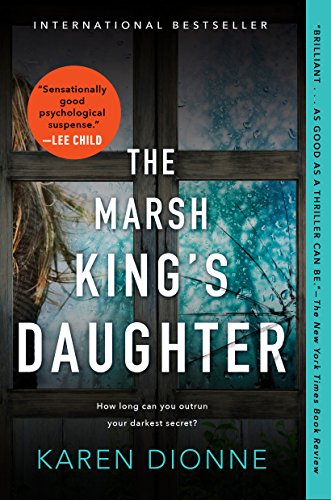
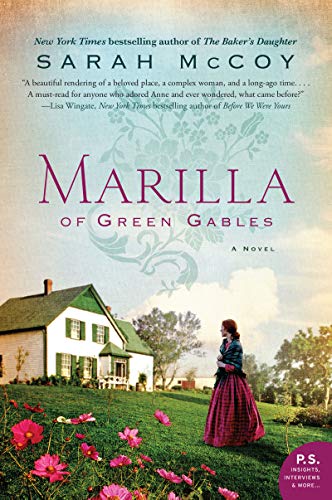
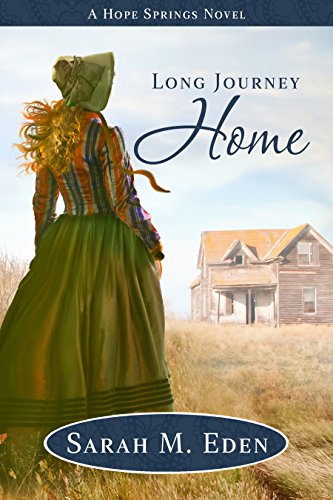
As a reminder, the prize is all three of my e-novels:

PLUS (assuming the winner has a device that supports a .mobi file) an e-copy of my grammar guide, There, Their, They're: A No-Tears Guide to Grammar from the Word Nerd. The e-version is more comprehensive and up-to-date than the print version, so booyah.

The winner is Ruth!

Congratulations to Ruth, and thanks to everyone who entered!

I'll be back to regular posting after the new year. Now, off for more pie . . .


Wednesday, December 14, 2011

Holiday Blog Hop Giveaway


Yippee for book giveaways, and an extra hooray for ones that coincide with Christmas!

I'm part of the Holiday Blog Hop, which runs from December 15 - December 25. Visit The Holiday Blog Hop to find the rest of the participating blogs (and so you can win more ebooks!).

Extra bonus: The winners from each participating blog will be put together, and one of them will be randomly chosen to win a Kindle Fire. (I recently got to see the Kindle my mother-in-law owns. Didn't get to use it, as my kids were all over it. It's very cool.)

SO: Enter any of the giveaways participating, including mine, and if you win, you'll have an extra shot at the grand prize.

Due to personal writing and editing deadlines (and thing like, oh, family and Christmas), this will be my last post until after the hop is over and I announce the winner.

My giveaway will be very simple:
The winner will receive a copy of all three of my e-novels:

PLUS an e-copy of my grammar guide, There, Their, They're: A No-Tears Guide to Grammar from the Word Nerd. (The e-version is more comprehensive and up-to-date than the print version, so booyah.)


Note: The 3 novels are available in formats other than .mobi (Kindle), but to date, the grammar book is only in .mobi. Apologies if the winner doesn't use Kindle; they'll miss out on that book.


As I did during my last giveaway, I'm not going to make people jump through lots of hoops. I like doing giveaways to thank my followers.

So that's all you need to do:
1) Be a follower (either on my blog through Google Friend Connect) or on Twitter.
THEN
2) Leave a comment on this post telling me that you're a follower (and which way).

That's it!

The fine print:
Entrants must be 18 years old, and I must be able to contact the winner, either via an email address left in a comment, or via a Blogger profile link. If the winner does not contact me to claim their prize within 48 hours, it's forfeit.


Merry Christmas, and happy reading!